Create a Modeling Portfolio That Gets You Hired
Your modeling portfolio isn't just a collection of nice photos. It's your resume, your business card, and your first impression all rolled into one. I've been in this industry a long time, and I can tell you this with certainty: your portfolio is the single most crucial asset you have. It communicates your brand, versatility, and professionalism before you ever set foot in a casting room.
Your Portfolio Is Your 24/7 Salesperson
Think of your portfolio as your silent representative, out there working for you around the clock. I’ve seen so many talented models get passed over, not because they lacked the look, but because their book failed to tell a compelling story. A strong portfolio is what separates just another face in the crowd from an in-demand professional.
Agents and clients are always short on time. I've personally seen casting directors flip through a book in under 30 seconds. What makes them stop and really look? It’s a portfolio that’s been thoughtfully put together—a collection of images that screams range, professionalism, and that unique spark they’re searching for.
The Power of a First Impression
Your portfolio is your chance to control the narrative of your career. It’s not just about looking good; it's about proving you understand the business side of modeling. A quick glance should instantly tell a casting director everything they need to know:
- Your Marketability: Can you sell a product? Embody a high-fashion concept? Connect with a commercial audience?
- Your Versatility: Do your photos show a wide range of expressions, styles, and characters?
- Your Professionalism: Is the photography high-quality? Is the selection well-curated? Is the presentation flawless?
This is where your professional identity is forged. The concept isn't so different from other industries, really. Just look at the importance of professional headshots for a strong brand—companies use them to define their image, and you must use your portfolio to define yours.
It’s an Investment in Your Future
Viewing your portfolio as a career asset isn't just a turn of phrase; it's a real investment in your future. While our world is different from finance, the core idea of building a valuable portfolio is the same. Funnily enough, the term "model portfolios" in the investment world has seen massive growth, with global assets expected to hit $8 trillion. It just goes to show how critical a well-built portfolio is for growth in any field.
From my experience, a portfolio that gets you into castings you once thought were out of reach is priceless. It's the most powerful tool you have to shape your career.
This guide is designed to help you build exactly that kind of asset. We're going to cover everything from picking your strongest shots to building a killer website that gets you noticed. For a deeper dive into the basics, be sure to check out our guide on how to create a https://fantasticportfolios.com/blog/professional-portfolio/.
Curating Your Essential Portfolio Photos
This is where the magic happens. Your photo selection is the absolute heart of your modeling portfolio. From my years in the industry, I can tell you this is the one step that truly separates the hopefuls from the working professionals.
Casting directors and agents are scanning for a specific visual story, and it’s your job to tell it—clearly and powerfully. The golden rule? Quality over quantity, always. A tight selection of 8-12 killer images is infinitely more effective than a folder of 30 mediocre ones.
Every single photo has to earn its spot. It needs to showcase your range and prove you're marketable, answering the silent questions clients have before they even ask them. Let’s break down the non-negotiables every strong portfolio must have.
The Non-Negotiable Headshot
First up, the headshot. This isn't just a pretty picture; it's your industry calling card, and it has to be flawless. It needs to be clean, professional, and capture your unique essence. We're talking about a shot that highlights your bone structure, shows clear skin, and draws people in with your eyes.
I always tell models they need at least two distinct headshots:
- A Commercial Headshot: This is your friendly, approachable, smiling shot. Think toothpaste ads or family-friendly brands. It should feel warm, genuine, and instantly likable.
- An Editorial Headshot: This one is your fashion-forward, serious side. It’s all about mood, attitude, and a strong, direct gaze. This proves you can handle high-fashion concepts.
Demonstrating Your Versatility and Physique
Once you’ve nailed the headshot, the rest of your portfolio must prove you’re not a one-trick pony. This is where you show off your versatility, which is truly your greatest asset in this business. A casting director needs to see that you're a chameleon who can fit into all kinds of campaigns.
A common mistake I see is a portfolio full of one-note expressions. To land jobs, you have to prove you can deliver a spectrum of moods—from joyful and energetic to intense and somber.
To give them that proof, you’ll need a few other key shots.
Before we dive into the specific shots you'll need, let's look at the "why" behind each one. Every photo should have a clear job to do, whether it's showing your physique, your acting ability, or your unique personality. This table breaks down the must-haves.
Must-Have Photos for a Winning Modeling Portfolio
| Photo Type | Purpose in Portfolio | Key Elements |
|---|---|---|
| Commercial Headshot | Shows your marketable, friendly side. Think mainstream brands. | Genuine smile, bright eyes, clean and simple background. |
| Editorial Headshot | Proves you can handle high-fashion and serious concepts. | Strong gaze, minimal or no smile, conveys a specific mood. |
| Full-Length Body Shot | Clearly displays your physique, proportions, and posture. | Simple attire (swimwear/athletic), neutral background, clean lighting. |
| Editorial Fashion Shot | Showcases your ability to pose, move, and tell a story with wardrobe. | Dynamic posing, interesting location or backdrop, full styling. |
| The Personality Shot | Makes you memorable and relatable; shows your authentic self. | Candid, laughing, or a quirky expression. Something that feels unposed. |
Each of these photos works together to build a complete picture of who you are as a model. Now, let's break down those essential full-body and personality shots.
- Full-Length Body Shot: This is absolutely essential. It should be a clean and simple photo, usually in swimwear or form-fitting athletic wear, that clearly and tastefully shows your physique. No busy backgrounds, no distracting props. The focus is 100% on you.
- Editorial Fashion Shot: Here's your chance to really get creative. This is a full-length or three-quarter shot that tells a story. It should showcase your ability to pose dynamically, interact with wardrobe, and convey a specific character or mood.
- The Personality Shot: I call this one the secret weapon. It’s a photo that lets your authentic self shine through. It could be a candid laugh, a quirky expression, or an image that hints at a hobby. This is what makes you memorable and relatable.
Your photo selection sets the stage for your entire presentation. Just as you carefully choose your images, the design of your portfolio matters immensely. In fact, a well-designed book or website starts with a strong visual introduction. To see what works, you can find some great inspiration in these examples of a portfolio cover page that capture attention immediately. By thoughtfully curating each photo, you build a powerful visual narrative that gets you noticed and, most importantly, hired.
Physical Book vs. Digital Site: Which Portfolio Do You Need?
The old debate is real: do you go with a classic, printed book or a slick online portfolio? Honestly, after years in this business, I can tell you the answer isn't a simple one. It really boils down to where you are in your career, who you're trying to impress, and the specific opportunity right in front of you.
I’ve seen models land huge gigs in completely different ways. One friend walked into a go-see and made an unforgettable impression because her physical book was just stunning—beautifully printed, substantial, something the casting director wanted to spend time with. Then again, another model I know locked down a contract with an international client purely because her website was clean, mobile-friendly, and loaded in a flash. You just have to be ready for both.
The New Standard: Your Digital Footprint
Let's be clear: the industry has gone digital. I'd estimate that over 90% of initial submissions, whether to agents or for castings, are happening online now. Having a modeling portfolio website isn't just a good idea; it's non-negotiable. It’s your 24/7 global access point, cheap to update, and lets you share your entire body of work with a single click.
No matter the format, the photos you choose are what really count. This decision tree can help you nail down the right types of shots for your goals.
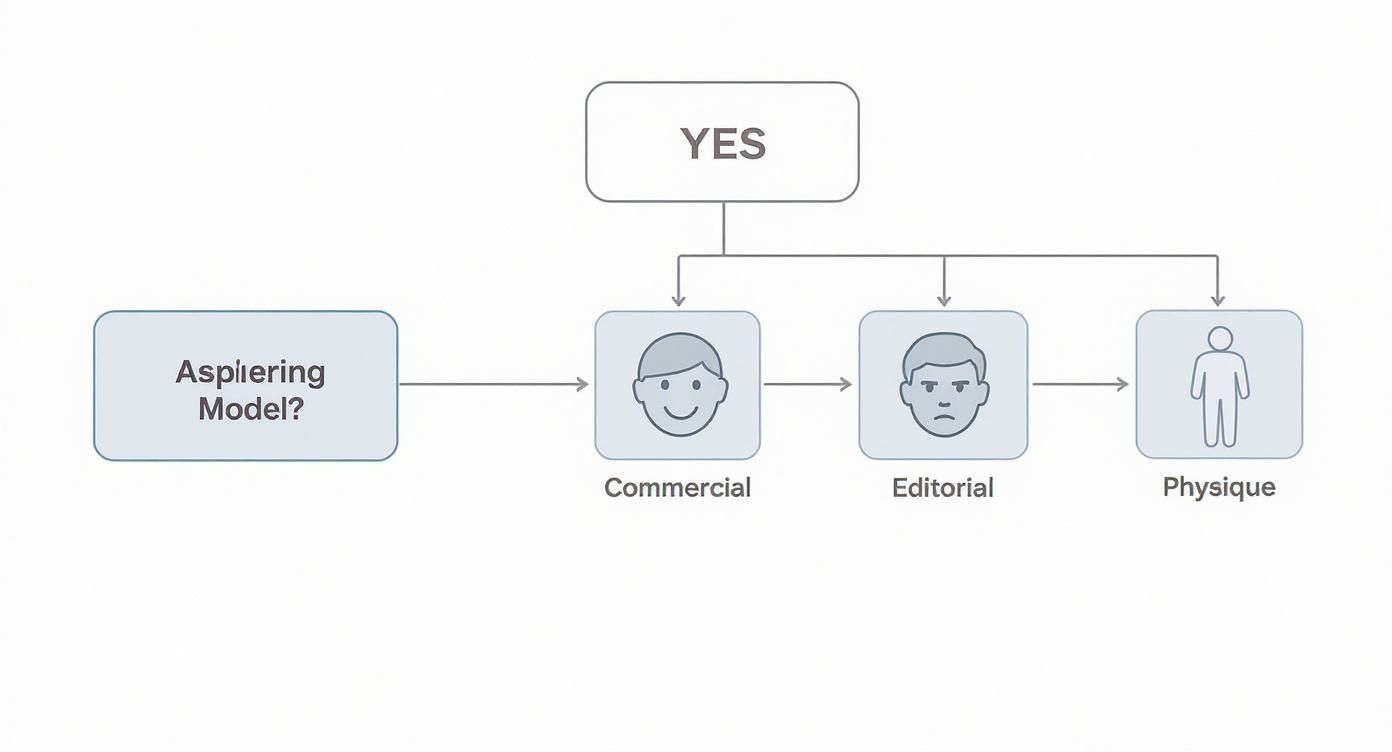
As you can see, the market you're targeting dictates the photos you need. Figure that out before you start building anything.
While a website is king, don't sleep on a simple, well-designed PDF version of your book. It's perfect for those direct email submissions where just dropping a link feels a little cold. We've got a whole guide on how to build a great PDF portfolio that's worth a read.
Why a Physical Book Still Packs a Punch
So, is the printed portfolio dead? Not a chance. When you're face-to-face—in an agency meeting, at a go-see, or during an interview—nothing beats a physical book. It has a weight and professionalism a screen just can't match. There’s something powerful about the tactile experience of flipping through high-quality prints.
In a waiting room full of models endlessly swiping on their phones, the one who walks in with a polished, physical portfolio makes a statement. It says you’re serious, you’re prepared, and you’ve invested in your craft.
This isn’t just a modeling thing, either. Other industries are catching on to the power of a curated, tangible presentation. Take the UK's financial sector, where "model portfolios" now make up a staggering 44% of gross investment fund sales. That translated to £7.8 billion in net sales in just the first half of 2025. It proves that people respond to a well-packaged, focused presentation over a scattered, digital-only approach. You can see more on this trend over at ISS Market Intelligence.
The smartest move? A hybrid approach. Use your digital portfolio as your workhorse for broad outreach and easy access. Then, keep your physical book as your secret weapon to make a killer impression when it truly matters.
Building Your Professional Online Portfolio
Let's be real: your own website is no longer a “nice to have.” It’s a non-negotiable professional hub for your modeling career. I can tell you from experience that an agent or client is far more likely to take you seriously when they see you've invested in a polished, dedicated online space. And don't worry, you don't need to be a tech wizard to create something that looks high-end.
The goal here is simple: let your photos be the hero. A clean, minimalist design is always the way to go. Your website's only job is to present your work, not distract from it.
Choosing Your Platform and Template
When it comes to building your site, you’ve got options. Platforms like Squarespace and Wix are popular for a reason—they’re user-friendly and packed with beautiful templates. You can also explore specialized portfolio builders designed specifically for creatives.
Here’s what I look for when I'm picking out a template:
- Image-Centric Layout: The design needs to put large, high-quality images front and center. No question.
- Simple Navigation: An agent should be able to find your galleries, stats, and contact info in seconds. If they have to hunt for it, you've already lost them.
- Mobile Responsiveness: I can guarantee that agents are scrolling through portfolios on their phones between meetings. A site that looks broken on mobile is an instant red flag. In fact, over 60% of website traffic often comes from mobile devices, so this is critical.
The best online portfolios I’ve ever seen all have one thing in common: they load fast and are incredibly easy to navigate. An agent will not wait around for slow-loading images; they’ll just move on to the next model.
Structuring Your Site for Impact
A well-organized website guides visitors exactly where you want them to go. Think of it as a digital version of your physical book, but with more room to show your unique personality. For some great inspiration on what's working in the industry, check out these examples of professional portfolios to see how other working models structure their sites.
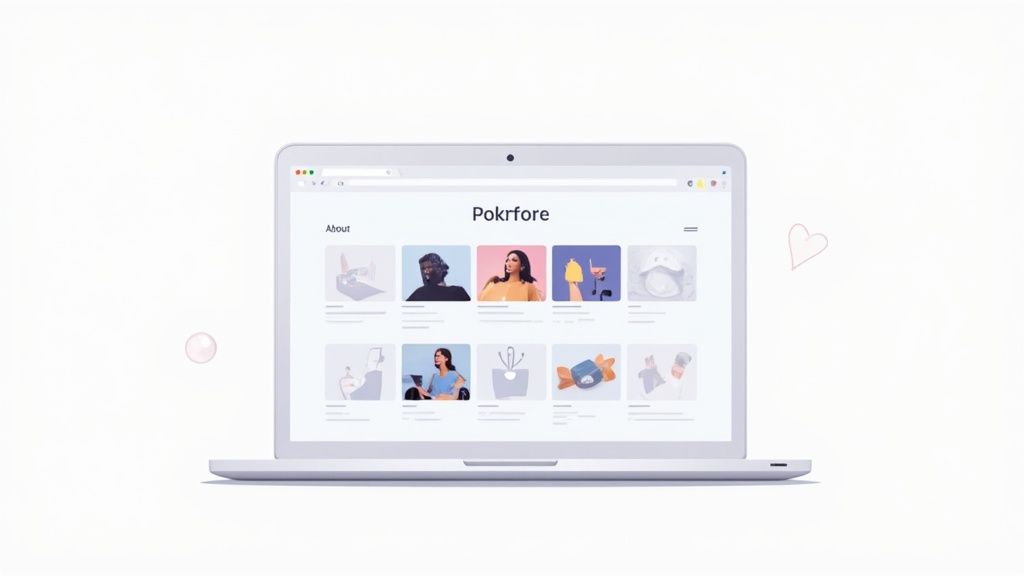
Your site absolutely needs a few key pages:
Dedicated Galleries
Don't just dump all your photos onto one page. That screams amateur. Instead, create separate galleries for different types of work. This immediately shows your range and professionalism.
- Commercial
- Editorial
- Runway (if applicable)
- Beauty/Headshots
About Page
This is your chance to connect on a more personal level. Beyond your stats (height, measurements, etc.), share a short, compelling bio. Let your personality come through—it’s what makes you memorable.
Contact Page
Make it ridiculously easy for people to get in touch. Include your agent's contact information (if you have one) and a simple contact form right on the page.
One final pro tip that so many models overlook: optimize your image sizes. Large, uncompressed photos will slow your site down to a crawl. Use an online tool to shrink the file size before you upload them. This small step ensures your portfolio loads quickly on any device, which makes all the difference.
For a deeper dive into these essentials, check out our complete article on https://fantasticportfolios.com/blog/portfolio-website-design/ to really master the details.
Keeping Your Portfolio Fresh and Relevant
Your modeling portfolio is a living document, not a project you finish and forget. I’ve seen it happen countless times: a talented model shows up with a book that’s two years old, and you can practically see the agents lose interest. An outdated portfolio is one of the biggest red flags in this industry because it screams that you aren’t actively working or developing your look.
Think of your portfolio like a high-performing financial asset. In the investment world, the market for managed model portfolios has seen explosive growth, with assets surging to $646 billion in the US alone—a 62% increase in less than two years. This trend shows that constant management and strategic updates are key to growth, and the same principle applies directly to your career. If you’re not actively managing your book, its value will drop. For a closer look at this financial trend, you can explore the rapid growth of model portfolios with Morningstar.
When and What to Update
So, how often should you refresh your images? There’s no single right answer, but my rule of thumb is to add new work every three to six months. Even if it’s just one or two powerful new shots, that regular refresh shows you’re consistently working and evolving.
Some updates are absolutely non-negotiable:
- When Your Look Changes: Did you get a dramatic haircut, color your hair, or get a visible tattoo? Your portfolio has to reflect that change immediately. Showing up to a casting looking different from your photos is a surefire way to lose credibility on the spot.
- After Paid Jobs: As soon as you get the tear sheets (published pages) from a paid job, get the strongest images in there. This is hard proof of your professional experience and marketability.
- During Slow Periods: If you haven't booked a job in a while, it’s time to "test." This is when you collaborate with photographers on creative shoots specifically designed to produce new, relevant images for your book.
Curation Is an Ongoing Process
Adding new photos is only half the job. Just as important is what you take out. Your portfolio should be a tightly curated gallery of your absolute best and most current work. As you add stronger, more recent images, you have to be ruthless about removing the weaker or older ones.
Your goal is to curate your portfolio like a museum exhibit, where every single piece is essential and tells the story of the model you are today. An old, slightly-out-of-focus photo from your first-ever shoot has no place next to your latest campaign image.
This ongoing process of adding and subtracting ensures your book is always sharp, professional, and compelling. A fresh portfolio shows agents you’re not just a model; you’re a professional managing a growing career. To make sure your digital presence matches this effort, our guide to maintaining a stunning online portfolio offers additional tips on keeping your website polished and effective.
Your Top Modeling Portfolio Questions, Answered
After years in this industry, I’ve seen the same questions pop up time and time again. These are the little details that can trip up new models—and even seasoned pros, honestly. They’re the things people worry about but are sometimes afraid to ask.
So, let's clear the air and tackle the most common questions I get about building a killer modeling portfolio.
How Much Should I Spend on My First Portfolio?
This is always the first question, and the answer isn't a simple number. It's better to think of your portfolio as a career investment, not just an expense. The quality of your photos is a direct signal of how seriously you take your career. A great starter portfolio can run anywhere from $500 to over $2,500, depending on who you shoot with, if you use a stylist, and how many looks you're aiming for.
My advice? Invest in one or two incredible shoots that give you a few knockout images. Don't spread a small budget thin over multiple mediocre sessions. Quality always, always trumps quantity. An agent would much rather see four stunning photos than a dozen that are just "okay."
Should I Include Runway Shots?
Great question. The answer really boils down to your career goals. If you’re gunning for high-fashion and your dream is to walk in major shows, then absolutely—a few professional, high-impact photos or a sharp video clip of your walk can be a game-changer.
But for most commercial, print, or lifestyle models, runway shots just aren't necessary. In fact, if your walk isn't your strongest asset or it doesn't match the kind of work you want, including those shots can actually pigeonhole you. Your portfolio should be a highlight reel of your strengths, so only include what makes you look your best for the jobs you want.
How Do I Start a Portfolio with No Professional Photos?
Every single model starts right here, so you're in good company. A lack of pro photos is a starting block, not a barrier. The first step is to start "testing"—which is industry-speak for collaborating with up-and-coming photographers who are also building their books.
Here’s a simple game plan to get you started:
- Find Your People: Social media is your best friend here. Use Instagram and local photography groups on Facebook to find photographers whose style vibes with the kind of model you want to be.
- Start with Digitals: Before anything else, get your digitals (or Polaroids) sorted. These are just clean, unedited snapshots of you. Think simple clothes, no makeup, and a plain background. They show agencies your natural look.
- Plan Your First Shoots: Once you connect with a photographer, plan a couple of distinct looks. Maybe one clean and commercial, and another that’s a bit more editorial. This starts to show your range right away.
The goal isn't to build a massive, perfect portfolio overnight. It’s about creating a small, powerful set of starter images that prove your potential. A strong set of 3-5 images is often all you need to get an agent's attention.
Ready to take those amazing photos and build an online portfolio that gets you booked? Fantastic Portfolios uses AI to create a professional, polished website from your experience in just 30 seconds. Build your site for free and land that next big gig. Get started now!